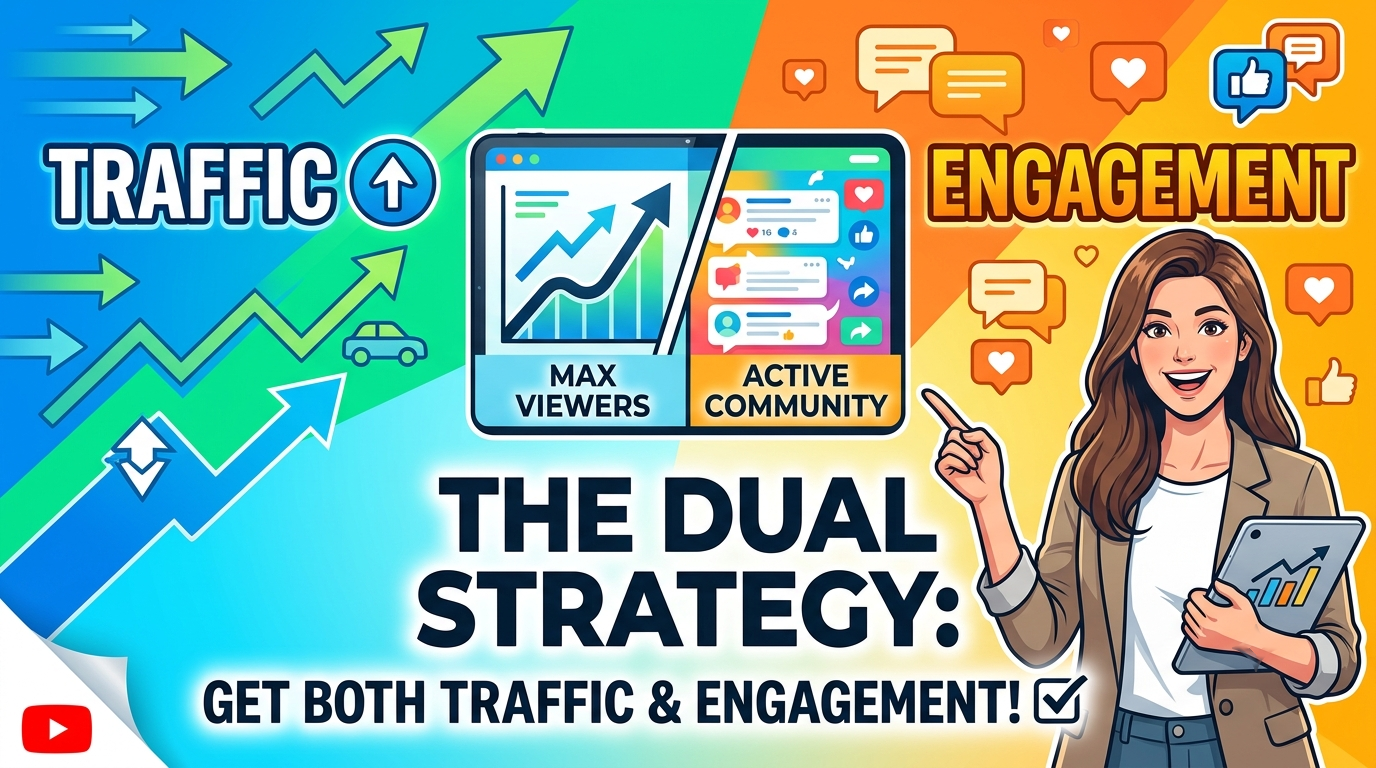
To truly win the digital landscape, you cannot treat your website’s metrics as isolated silos. You need a unified approach. In this comprehensive guide, we are going to explore the intersection of these two vital disciplines. We will break down exactly how to create content that generates traffic while seamlessly applying advanced tactics to maximize long-term audience engagement.
Part 1: Engineering Content for Traffic Generation
If you want to pull visitors from search engines, social media, and referring websites, your content creation process must begin long before you write the first sentence. Traffic generation is about reverse-engineering human curiosity and algorithm preferences.
1. The “Skyscraper” Technique
To create content that generates traffic, you must be willing to outwork the competition. The “Skyscraper Technique,” originally coined by SEO expert Brian Dean, is one of the most reliable frameworks for doing this. The premise is simple: find a piece of content in your niche that is already performing incredibly well and generating massive traffic. Analyze it critically. Then, build a “taller skyscraper.” If the top-ranking article is “10 Ways to Save Money on Groceries,” you write “The 25 Ultimate Grocery Saving Hacks,” and you include a downloadable meal-planning spreadsheet, better graphics, and expert interviews. Search engines will eventually recognize that your piece is the superior, more comprehensive resource and reward you with the traffic.
2. Targeting Keyword “Clusters”
Instead of writing a single, isolated article trying to rank for a massive keyword, build a content cluster. A content cluster involves writing one large “pillar” page about a broad topic, surrounded by multiple smaller articles that target highly specific, related long-tail keywords. Because search algorithms heavily favor topical authority, when you link these clustered pages together, the search engine views your website as an encyclopedic resource on that subject. This interconnected web of information is the absolute best way to ensure your entire catalog of content is continuously pulling in organic visitors.
3. Exploiting the “Information Gap”
People click on headlines because they feel an “information gap”—the cognitive disconnect between what they currently know and what they want to know. To drive traffic from social media platforms or email newsletters, your headlines and content framing must exploit this gap. Instead of naming an article “How to Edit Videos,” reframe it as “The 3 Editing Mistakes Ruining Your Video Retention.” The latter creates an immediate information gap. The user thinks, Wait, am I making those mistakes? This psychological trigger forces the click.
Part 2: The Hook—Bridging Traffic to Audience Engagement
Congratulations. Your SEO strategy worked, and a user has clicked your link. You now have roughly five to eight seconds to convince them to stay. If your content does not immediately transition from “traffic generation” mode into “audience engagement” mode, your bounce rate will skyrocket, and search engines will penalize your rankings.
The Psychology of the Above-the-Fold Experience
The moment your page loads, the user makes a subconscious judgment about whether your content is worth their time. To optimize this crucial moment for audience engagement, follow these rules:
- Remove the Clutter: Do not assault the user with three pop-ups, a newsletter slide-in, and an auto-playing video before they can read the first sentence. Let the content breathe.
- The “Nodding” Introduction: Your opening paragraph should not be a dry summary of the article. It should be a statement of empathy. State the user’s problem so accurately that they find themselves physically nodding their head. When a reader feels understood, their engagement level instantly multiplies.
Utilizing “Bucket Brigades”
In copywriting, a “bucket brigade” is a linguistic technique used to keep the reader’s eyes moving down the page. They are short, punchy transitional phrases that usually end with a colon.
They look like this:
- Here is the truth:
- But it gets worse:
- Let me explain:
- Think about it for a second:
When a reader’s attention begins to wane, a bucket brigade acts as a visual and mental reset. It pulls them out of their scanning habit and forces them back into the narrative flow of your content, drastically improving your “Time on Page” metric.
Part 3: Formatting for Extreme Audience Engagement
Writing brilliant prose is only half of the content equation. If you are serious about audience engagement, you must become obsessed with user interface (UI) and visual formatting. The modern internet reader does not consume content like a novel; they consume it like a menu.
Rhythm and White Space
A wall of text is the enemy of engagement. To keep your audience hooked, vary the rhythm of your paragraphs. Follow a three-sentence paragraph with a single-sentence punchline. Like this. White space gives the reader’s brain a micro-break. It makes the act of reading feel effortless rather than like a chore.
Strategic Visual Assets
Do not just insert generic stock photos into your content for the sake of having images. Every visual asset should serve a purpose and deepen the engagement.
- Custom Infographics: If you mention a statistic, turn it into a custom chart.
- Tweetable Quotes: Pull out the most impactful sentence of a section and format it as a stylized, standalone blockquote.
- GIFs and Micro-Videos: For instructional content, a three-second looping GIF showing exactly where to click on a software interface is infinitely more engaging than a long paragraph explaining the same action.
The “Open Loop” Technique
If you want to keep your audience engaged until the very last word, you must master the art of the “open loop.” An open loop is a storytelling device where you hint at a fascinating piece of information early in the content, but you delay the resolution until later in the piece.
For example, in the introduction, you might say, “Later in this guide, I will reveal the exact email template that increased my open rates by 40%, but first, we need to understand why subject lines fail.”
By opening a loop, you create a sense of anticipation. The reader will eagerly consume the rest of your content just to find the closure they were promised.
Part 4: The Engagement Loop
True audience engagement does not end when the user finishes reading the article. The most successful digital creators use their content to build an infinite engagement loop.
When a reader reaches the bottom of your post, they are at their warmest. They have just received immense value from you. This is the exact moment you must ask for an investment.
- The Comment Trigger: Do not ask a generic “Leave a comment!” Ask them to choose a side. “Which strategy from this list are you going to try first? Strategy A or Strategy B? Let me know in the comments.”
- The Content Upgrade: Offer a free, downloadable resource (like a checklist or a PDF summary of the article) in exchange for their email address. Once they are on your email list, you can notify them every time you publish new content, turning a one-time visitor into recurring, guaranteed traffic.
Conclusion
The most successful websites on the internet do not view traffic and retention as two separate disciplines. They understand that they are two sides of the exact same coin.
Creating content that generates traffic requires a deep understanding of SEO, search intent, and data-driven keyword research. But securing audience engagement requires an understanding of human psychology, visual pacing, and empathetic storytelling. By merging these two strategies—building the skyscraper to attract the algorithms, and using bucket brigades and open loops to captivate the humans—you will elevate your website from a quiet digital brochure into a thriving, high-traffic, hyper-engaged destination.