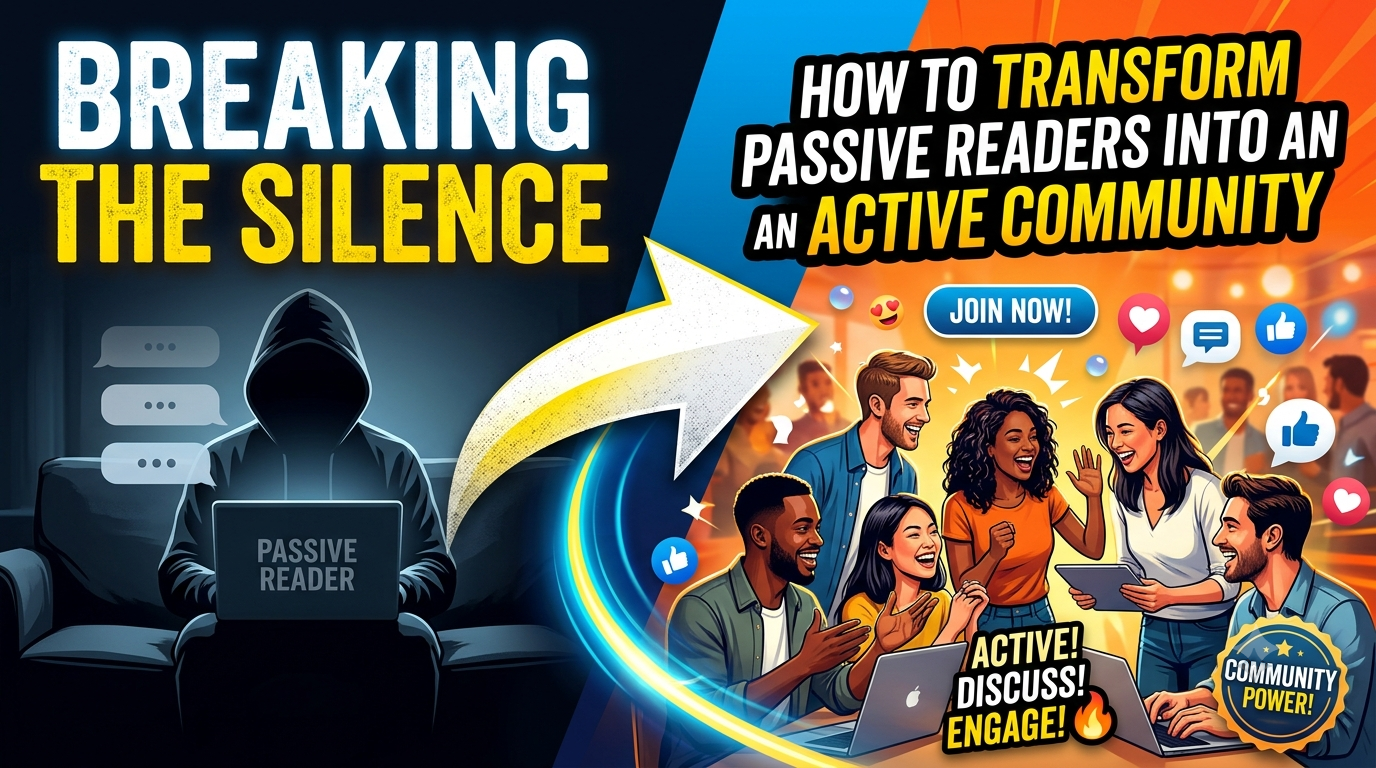
If you are struggling to build a community, you are in the right place. In this comprehensive guide, we are going to explore the psychology of online interaction and outline the most effective beginner tips for audience engagement. By implementing these foundational strategies, you can begin to foster a loyal, vocal, and interactive audience from day one.
Understanding the Psychology of Engagement
Before we dive into actionable tactics, we must first understand why people engage online. Human beings are inherently social creatures. When someone takes the time to leave a comment, send an email, or share a post, they are usually driven by one of three core desires:
- The Desire to Be Helpful: People love to share their expertise. If they see someone struggling with a problem they know how to solve, they will often chime in.
- The Desire for Connection: People want to find a “tribe” of like-minded individuals who share their interests, passions, or frustrations.
- The Desire for Validation: People want to feel seen and heard. They want their opinions to matter.
As a beginner, your primary goal is to create an environment that satisfies these three desires. You are not just broadcasting information into the void; you are hosting a digital dinner party. Your job is to make your guests feel welcome, introduce them to the conversation, and give them a safe space to express themselves.
Foundational Beginner Tips for Audience Engagement
Moving your audience from passive consumers to active participants requires a deliberate shift in how you communicate. Here are the most effective beginner tips for audience engagement that you can start using today.
1. Ditch the “Corporate Broadcast” Tone
One of the biggest mistakes beginners make is trying to sound too professional, stiff, or academic. They use words like “we” and “our company” even when they are a solo creator sitting in their living room.
People do not want to talk to a faceless corporation or a textbook; they want to talk to another human being. To encourage interaction, you must write conversationally. Use the words “I” and “You.” Share your personal struggles, your failures, and your raw opinions. When you show your humanity and vulnerability, you give your audience permission to do the same. A conversational tone dramatically lowers the barrier to entry for someone considering leaving a comment.
2. Master the “Micro-Question” CTA
At the end of an article or a social media post, many beginners use a generic Call-to-Action (CTA) like, “What do you think? Let me know in the comments below!”
This is far too broad. It requires the reader to summarize their entire thought process, which is too much work. Instead, you need to use “Micro-Questions.” Ask a highly specific, easily answerable question that ties directly into the topic.
For example, if you are writing about morning routines, do not ask: “What is your morning routine?” Instead, ask: “Are you a coffee person or a tea person first thing in the morning?” or “Do you check your phone before you get out of bed? Yes or No?”
By making the question incredibly simple to answer, you reduce the friction of engagement. Once a user answers the simple question, they are much more likely to elaborate and start a broader conversation.
3. The “Reply to Everything” Rule
When you are just starting out and your audience is small, you have a massive advantage over large creators: you have the time to be incredibly personal.
If someone takes the time out of their busy day to leave a comment on your site or send you a message, you must treat that interaction like gold. Implement the “Reply to Everything” rule. Do not just “like” their comment or reply with a generic “Thanks for reading!”
Write a thoughtful, personalized response. Use their name. Acknowledge the specific point they made. Most importantly, end your reply with another question to keep the conversation going. When other silent readers see that you are actively, genuinely engaging in the comments section, they will feel far more comfortable jumping into the discussion themselves.
4. Create “Low-Friction” Interactive Elements
Sometimes, leaving a public comment is too intimidating for a new reader. You can boost audience engagement by offering lower-friction ways for people to interact with your site.
Consider adding simple interactive elements to your pages. This could be a one-click poll at the bottom of an article, an interactive quiz, or even simple “reaction” emojis (like a thumbs up, a heart, or a lightbulb) that users can click to show how the article made them feel. These micro-interactions require zero typing and zero public vulnerability, making them the perfect stepping stone for building a habit of engagement.
5. Transition to Private Spaces (The Email Newsletter)
Public comment sections can sometimes feel like standing up with a microphone in a crowded room. For many readers, the best engagement happens in private.
Encourage your visitors to join an email newsletter, but frame it as a two-way street. When you send out your welcome email to a new subscriber, explicitly ask them to hit the “Reply” button.
You can say something like: “Thank you so much for joining! I read every single email I get. Reply to this message and tell me what the biggest struggle you are facing right now is.”
Email feels incredibly personal and intimate. Getting a reader to reply to an email builds a 1-on-1 connection that simply cannot be replicated on a public webpage. Once that private connection is established, that reader will become your most vocal advocate in your public spaces.
Navigating Negative Engagement
As a beginner, you must be prepared for the reality of the internet: not all engagement is positive. Eventually, as your audience grows, you will receive a negative comment, a harsh critique, or an outright troll.
How you handle this negative engagement defines your community.
- Ignore the Trolls: If someone is being abusive, using hate speech, or clearly just trying to get a rise out of you, delete the comment and block the user. Protect the positive energy of your digital space.
- Embrace Constructive Criticism: If someone respectfully disagrees with your opinion, lean into it! Reply politely, thank them for their perspective, and explain your side further. A healthy debate in your comment section shows new readers that your platform is a place for intelligent, open discourse.
Conclusion: Community is a Slow Build
Fostering a highly engaged audience is not a marketing tactic you can hack or automate. It is the slow, deliberate process of building human relationships at scale.
As you implement these beginner tips for audience engagement, you must practice extreme patience. Do not get discouraged if your first few attempts at asking questions or starting polls are met with silence. Keep showing up. Keep writing conversationally. Keeps asking specific questions.
Eventually, one person will comment. Treat them like a VIP. Then another will join. Then another. Over time, that compounding effort will transform your quiet website into a bustling, vibrant community of passionate advocates. Remember, an audience simply listens; a community talks back. Focus on the latter, and your digital presence will thrive.