

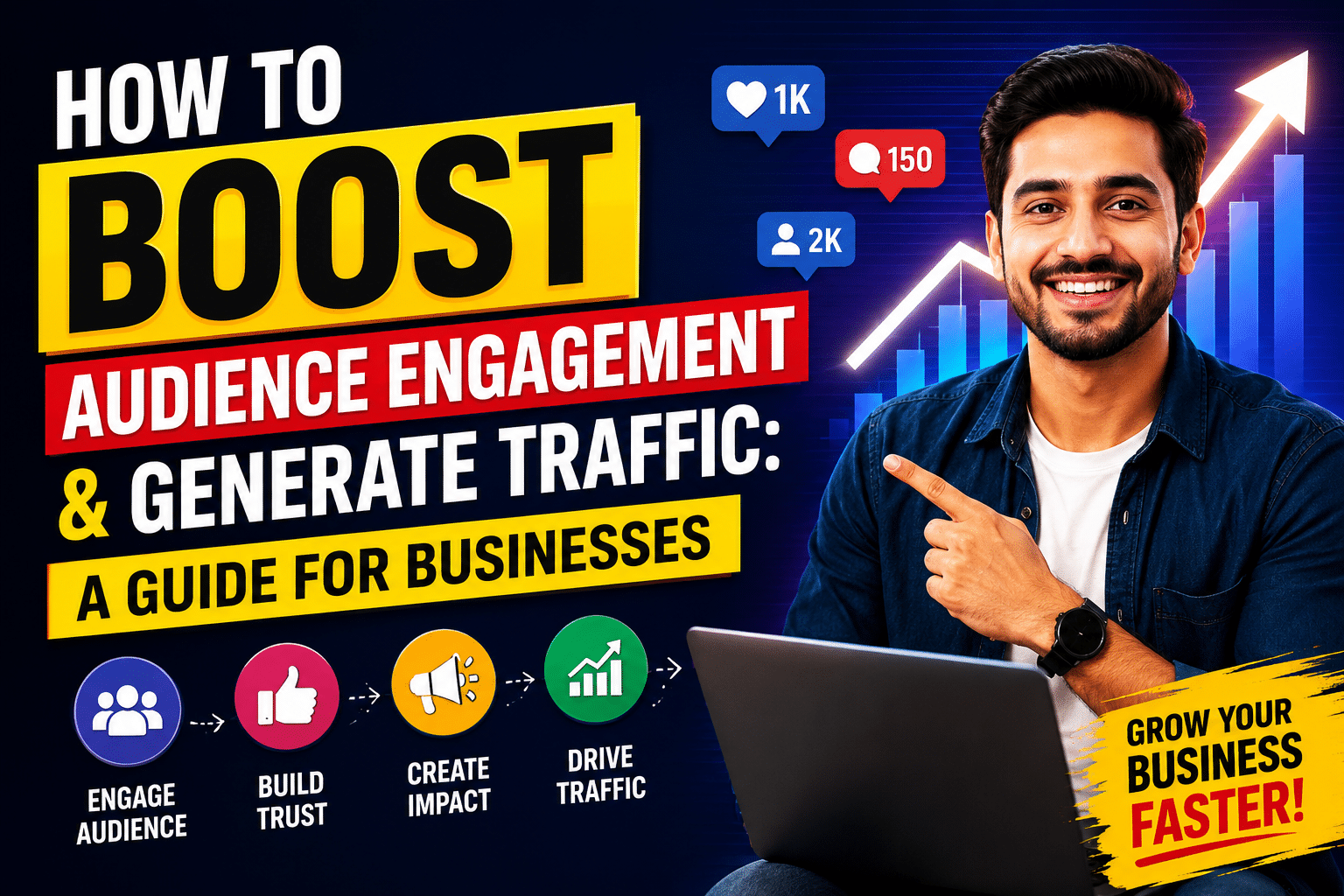
In today’s hyper-competitive digital landscape, launching a website or a blog is merely the first step in a much longer journey. For modern businesses, the real challenge does not lie in building the digital storefront, but rather in getting people to walk through the doors and stay awhile. Countless brands publish articles, post on social media, and send out newsletters, yet they still hear crickets. Why? Because they are pushing out information without a strategy designed to connect, resonate, and boost audience engagement.
Whether you are a startup founder looking for beginner tips, or an established enterprise trying to revamp your digital footprint, understanding how content drives traffic is vital. You cannot simply write a post and hope for the best. You need a holistic approach that pulls visitors in, holds their attention, and converts them from casual readers into loyal advocates.
In this comprehensive guide, we will break down how businesses can use targeted content to generate high-quality traffic, create “featured” flagship resources, and fundamentally boost audience engagement across all digital touchpoints.
Why Businesses Need a Content-First Approach
For businesses, content is no longer just a marketing buzzword; it is the currency of the internet. When a potential customer faces a problem, their first instinct is to pull out their smartphone and type a question into a search engine. If your business’s website provides the most accurate, helpful, and accessible answer to that question, you win their initial trust.
However, many businesses make the mistake of making their content purely promotional. A blog post that reads like a sales brochure will actively drive users away. Instead, a successful content strategy is built on the concept of value exchange: you provide free, highly valuable information, and in return, the user gives you their time, attention, and eventually, their business.
To lay the groundwork for traffic generation, your content must be tailored to your specific audience. This requires creating detailed buyer personas. Who are you trying to reach? What are their pain points, goals, and daily challenges? By aligning your content topics directly with the needs of your target demographic, you naturally increase the likelihood that they will not only find your site but actually read what you have to say. When your content speaks directly to a user’s specific problem, you effortlessly boost audience engagement because the reader feels understood.
Beginner Tips for Generating Consistent Traffic
If you are just starting out, looking at a Google Analytics dashboard with zero daily visitors can be incredibly disheartening. Generating traffic takes time, but by implementing a few foundational beginner tips, you can accelerate the process and start seeing consistent organic growth.
1. Master Long-Tail Keyword Research
As a beginner or a new business, trying to rank for a massive, highly competitive keyword like “digital marketing” or “shoes” is nearly impossible. Instead, focus on “long-tail keywords.” These are longer, more specific phrases that your audience is searching for, such as “how to do digital marketing for a local bakery” or “best running shoes for flat feet.” Because these phrases have lower search volumes, they also have lower competition. Creating content around these specific queries is the fastest way to start generating traffic to your site.
2. Prioritize Search Intent
Generating traffic isn’t just about using the right keywords; it’s about understanding why someone typed that keyword in the first place. Are they looking to buy a product (transactional intent)? Are they looking for a specific website (navigational intent)? Or are they looking for information (informational intent)? Ensure your content perfectly matches the intent behind the search. If a user is looking for a beginner’s tutorial, do not send them to a product sales page.
3. Consistency is Your Greatest Asset
Search engines love fresh, consistently updated websites. If you publish five articles in one week and then nothing for three months, search engine crawlers will assume your site is inactive. Develop a realistic content calendar. Whether it is one high-quality post a week or two shorter posts a month, stick to a schedule. Consistency builds a habit for your readers and signals to search engines that your website is a reliable source of ongoing information.
4. Optimize for On-Page SEO
You do not need to be a technical wizard to get the basics of SEO right. Ensure your main keyword is in your article’s title, the URL slug, the meta description, and naturally woven into the first paragraph. Use header tags (H2, H3) to break up your text, making it easy for search engines to understand the hierarchy of your information and easy for users to skim.
Proven Strategies to Boost Audience Engagement
Generating traffic is only half the battle. If a thousand people visit your site but leave after three seconds (resulting in a high bounce rate), your traffic is practically worthless. Engagement is the metric that proves your content is actually resonating. Here is how you can proactively boost audience engagement once visitors land on your page.
Tell Compelling Stories
Humans are hardwired to respond to narratives. Instead of just listing dry facts and statistics, frame your content around a story. If you are writing a guide for businesses on how to use software, start with a brief case study of a real company that struggled, implemented the software, and succeeded. Storytelling creates an emotional hook that keeps readers scrolling down the page.
Format for Readability
Attention spans are shrinking. If a visitor clicks on your link and is greeted by a massive, unbroken wall of text, they will leave immediately. To keep your audience engaged, you must optimize your formatting:
- Keep paragraphs short (no more than 3-4 sentences).
- Use bulleted and numbered lists to make information digestible.
- Bold important concepts so skimmers can still get value from the page.
- Incorporate relevant multimedia. High-quality images, infographics, and embedded videos provide visual breaks and cater to different learning styles.
Encourage Two-Way Conversations
Content should not be a monologue; it should be a dialogue. End your articles with a thought-provoking question or a clear Call-To-Action (CTA) asking readers to share their thoughts in the comments section. When readers do leave a comment, make sure you reply promptly. Acknowledging your audience makes them feel valued and significantly increases the chances that they will return to your site in the future.
Leverage Interactive Content
If you want to drastically boost audience engagement, consider moving beyond static text. Interactive content—such as quizzes, calculators, polls, and assessments—requires the user to actively participate rather than passively read. For businesses, a “ROI Calculator” or an “Industry Knowledge Quiz” can be incredibly engaging tools that not only keep users on the site longer but also provide valuable data about your audience.
Creating “Featured” Pillar Content
As your content library grows, you will realize that not all articles are created equal. Some posts will naturally perform better than others. To maximize the impact of your best work, you need to implement a “Featured” content strategy.
Featured content (often referred to as cornerstone or pillar content) represents the absolute best, most comprehensive information your business has to offer. These are usually in-depth, long-form guides (often upwards of 3,000 words) that cover a core topic exhaustively. For example, if you run a real estate agency, your featured content might be “The Ultimate Guide to Buying Your First Home in 2026.”
Why Featured Content Matters
By designating certain articles as “Featured” on your homepage or your blog’s sidebar, you immediately direct new traffic to your highest-converting pages. This featured content acts as the hub in a “hub-and-spoke” model. You can write dozens of smaller, beginner-friendly articles (the spokes) that all internally link back to this massive featured guide (the hub). This internal linking structure passes SEO authority to your most important pages, helping them rank higher in search results.
Furthermore, featured pillar pages are excellent tools for lead generation. You can offer a downloadable PDF version of the featured guide, an accompanying checklist, or a video course in exchange for the visitor’s email address. This transitions the user from an anonymous website visitor into a tangible business lead.
Conclusion
Succeeding in the digital space requires a delicate balance between attracting eyes and capturing hearts. For businesses, generating traffic is about understanding search intent, mastering beginner SEO tips, and consistently providing valuable solutions to your audience’s problems.
However, getting them to your site is just the beginning. By crafting readable, story-driven content, utilizing interactive media, and showcasing comprehensive “featured” guides, you can effectively boost audience engagement and build a community around your brand. Remember, content marketing is a marathon, not a sprint. Focus on the needs of your audience, provide unrelenting value, and the traffic, engagement, and business growth will inevitably follow.
