In today digital advertising world, efficiency and brand control are king. If you’ve ever managed multiple campaigns for clients, you know how messy ad platforms can get — different dashboards, reporting formats, and branding conflicts. This is where a white label ad server comes in. But what exactly is it? Why are digital agencies and brands flocking to it? And how can it supercharge your advertising operations while keeping your brand front and center?
Let’s unpack everything you need to know about white label ad servers — from the basics to advanced strategies, benefits, pitfalls, and future trends.
What Is a White Label Ad Server?
A white label ad server is essentially an advertising technology platform that allows businesses and agencies to manage, serve, and track digital ads across websites, apps, and other channels — all under their own branding. Think of it as renting a Ferrari engine but wrapping it in your own car’s body.
Instead of relying on third-party platforms like Google Ad Manager or Media.net, which show their branding and limits, white label ad servers let you maintain full control of the interface, reporting, and client-facing dashboards.
At its core, a white label ad server provides:
-
Ad management tools
-
Campaign tracking
-
Real-time reporting
-
Inventory management
-
Integration with analytics and other ad networks
In short, it’s the backbone of scalable, professional advertising operations.
How White Label Ad Servers Work

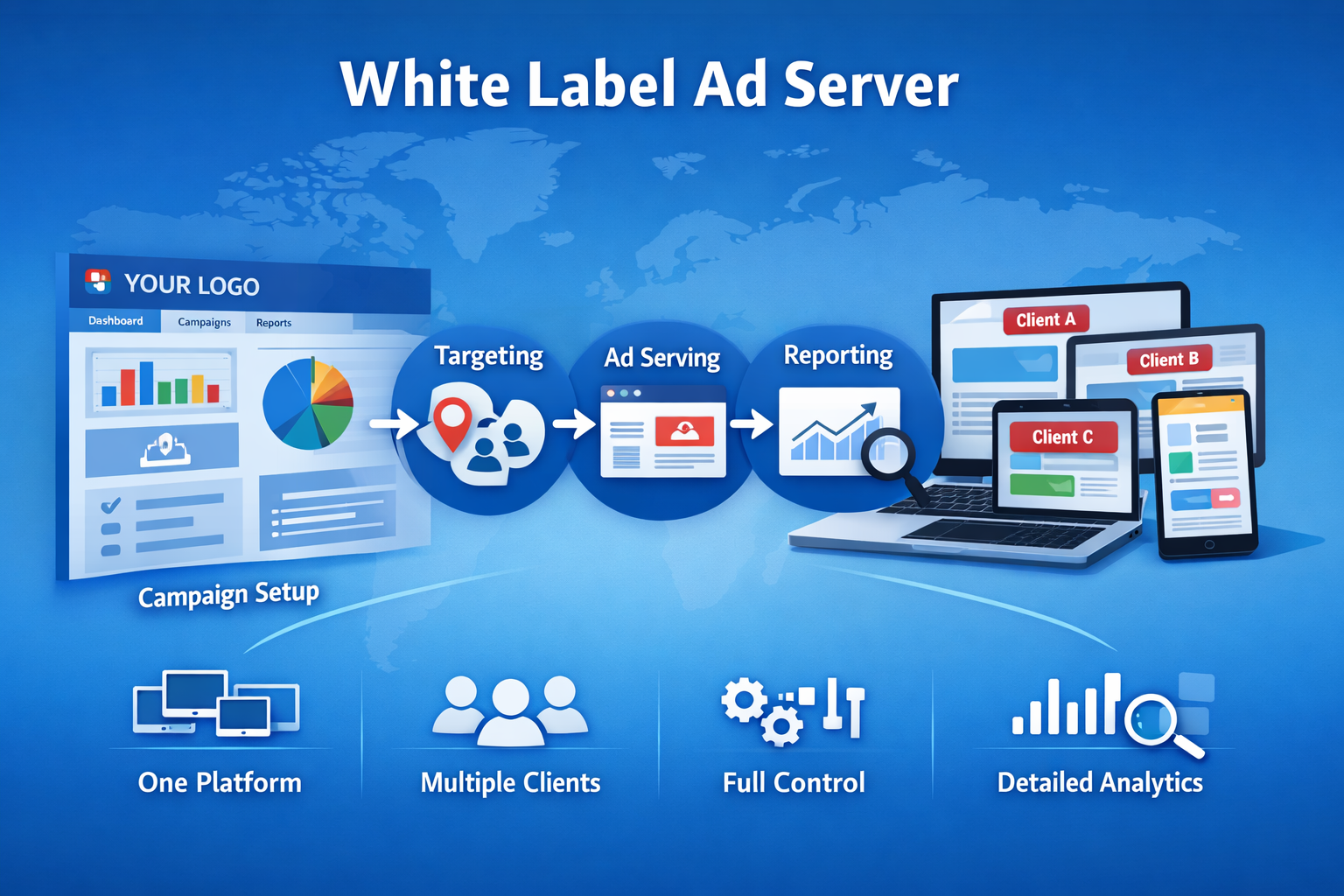
Most white label ad servers operate on a SaaS (Software-as-a-Service) model. Agencies or publishers log in to their own branded dashboard, upload creatives, set targeting, and configure ad placements. The server then serves these ads to websites or apps, tracks engagement, and generates detailed reports.
Here’s a step-by-step breakdown:
-
Setup & Branding – The platform is rebranded with your agency or company logo.
-
Campaign Creation – Upload banners, video ads, or HTML5 creatives.
-
Targeting & Scheduling – Define geo, device, audience segments, and run times.
-
Serving Ads – The ad server delivers ads across client sites or your own properties.
-
Tracking & Reporting – Track impressions, clicks, conversions, CTRs, and more.
-
Optimization – Use the insights to refine campaigns for better performance.
By keeping all this under your branding, clients only see your agency, not the third-party software running behind the scenes.
White Label Ad Server vs Standard Ad Server
So, why not just use Google Ad Manager or similar platforms? Let’s break it down.
| Feature | Standard Ad Server | White Label Ad Server |
|---|---|---|
| Branding | Platform branding visible | Your branding front and center |
| Client Access | Limited customization | Fully branded client dashboards |
| Pricing | Fixed / volume-based | Flexible, often subscription-based |
| Control | Platform limitations | Full control over reporting & features |
| Client Trust | May feel “third-party” | Professional, agency-owned experience |
In short, white label ad servers give control, customization, and credibility that standard ad servers cannot.
Who Uses White Label Ad Servers?
White label ad servers are widely used by:
-
Digital Marketing Agencies – To present a fully branded ad management service to clients.
-
Publishers – To monetize their websites or apps without revealing third-party networks.
-
Affiliate Marketers – To track campaigns across multiple networks seamlessly.
-
E-commerce Platforms – To manage in-house ad campaigns with full brand visibility.
If you manage multiple campaigns for clients or run a large inventory, these servers are a game-changer.
Top Benefits of Using a White Label Ad Server
White label ad servers aren’t just about branding. They deliver tangible business advantages.
1. Brand Consistency
Clients only see your branding. You appear professional, capable, and tech-savvy, even if you’re relying on a third-party backend.
2. Complete Control
You control ad placements, targeting, scheduling, and reporting without restrictions from a third-party platform.
3. Streamlined Operations
Managing multiple campaigns across networks becomes simple. A single dashboard saves hours of manual reporting and reduces errors.
4. Enhanced Reporting & Analytics
Customizable reports let clients see what matters most — CTR, CPM, ROI, conversions, and more — without exposing third-party vendors.
5. Revenue Growth
By charging clients for a premium, branded service or keeping all ad revenue in-house, agencies and publishers can significantly increase margins.
6. Flexibility & Integration
White label servers integrate with CRMs, analytics platforms, and multiple ad networks — allowing you to automate and scale campaigns efficiently.
Key Features to Look for in a White Label Ad Server
Not all white label ad servers are created equal. When evaluating platforms, look for:
-
Multi-format support – banners, video, native ads, and HTML5.
-
Real-time reporting – up-to-date analytics on every metric.
-
Customizable dashboards – branding, metrics, and UX flexibility.
-
Advanced targeting – geo, device, demographics, behavior.
-
Integration capabilities – link with Google Analytics, CRMs, and other tools.
-
Fraud detection & brand safety – essential for high-value campaigns.
-
Automated optimization – A/B testing, CTR boosting, and bid management.
Choosing the right platform is critical to scaling operations without headaches.
White Label Ad Server Pricing Models
Pricing varies depending on features, scale, and vendor. Common models include:
-
Monthly Subscription – Fixed fee for unlimited campaigns or impressions.
-
Pay-as-you-go – Based on impressions or clicks.
-
Tiered Packages – Small, Medium, Enterprise tiers with different features.
Many agencies prefer monthly subscriptions, as they offer predictable costs and full access to features.
White Label Ad Server vs Programmatic Advertising
You might ask: isn’t programmatic advertising enough?
Programmatic platforms (like The Trade Desk or DV360) automate bidding and ad placements. But white label servers offer human control, brand ownership, and client-facing reporting.
In other words:
-
Programmatic: Efficiency + scale
-
White label ad server: Branding + control + client trust
Most successful agencies combine both: programmatic campaigns are run through their branded white label platform.
Common Challenges and How to Avoid Them
Even the best servers have challenges. Here’s what to watch for:
1. Technical Setup
Some platforms require DNS setup, SSL certificates, or ad tags. Work with a tech partner to avoid downtime.
2. Learning Curve
Your team must understand targeting, reporting, and creative optimization. Provide training and documentation.
3. Vendor Lock-In
Some platforms make it difficult to migrate data. Choose vendors with exportable reports and open APIs.
4. Scaling Issues
Ensure the server can handle growing ad inventory and high-traffic websites without slowing down.
How to Integrate White Label Ad Servers into Your Workflow
Integration is key. Here’s a simple roadmap:
-
Assess Inventory – Know your campaigns, clients, and ad space.
-
Select a Platform – Based on features, cost, and scalability.
-
Brand the Server – Add logos, color schemes, and client dashboards.
-
Migrate Existing Campaigns – Move campaigns from third-party platforms carefully.
-
Train Team – Ensure your team can launch, monitor, and optimize campaigns.
-
Client Onboarding – Give clients clear instructions to access dashboards and reports.
-
Automate Reporting – Schedule reports, alerts, and dashboards to save time.
A structured workflow ensures your white label ad server works like a well-oiled machine.
Future of White Label Ad Servers
The digital ad ecosystem is evolving rapidly. Here’s what’s next:
-
AI & Machine Learning: Automated optimization, predictive targeting, and CTR improvements.
-
Cross-Channel Reporting: Integrating TV, OTT, mobile, and display campaigns in one dashboard.
-
Blockchain & Transparency: Tracking impressions, clicks, and fraud using blockchain technology.
-
Personalization: Serving hyper-targeted ads based on AI-driven consumer behavior.
-
Global Expansion: Platforms supporting multi-language, multi-currency, and GDPR compliance.
If you want to stay competitive, adopting white label technology is no longer optional.
Case Studies: How Agencies Benefit from White Label Ad Servers
-
Digital Marketing Agency London: Increased client retention by 35% by offering branded reporting dashboards.
-
UK Publisher Network: Boosted ad revenue by 50% by controlling pricing and placements through a white label server.
-
Affiliate Marketing Hub: Reduced campaign management time by 60% and optimized ROI using custom targeting features.
These examples show that white label ad servers aren’t just tech tools — they’re revenue engines.
Conclusion
If you manage multiple campaigns, client accounts, or websites, a white label ad server is an investment in credibility, efficiency, and revenue growth.
It’s more than just software — it’s a tool for scaling operations, building trust, and keeping your brand front and center. While there’s a learning curve and cost, the long-term payoff in control, client satisfaction, and profitability makes it worth considering.
By adopting a white label solution, agencies and publishers can not only streamline their ad management but also present a professional, unified brand experience to every client — and that’s a game-changer in the competitive digital advertising landscape