Marketing Fundamentals They jump on every new marketing trend, copy competitors’ flashy campaigns, and chase “growth hacks” that promise overnight results. But in the rush, they forget the basics. And that’s where the real damage happens.
Because while tools, platforms, and trends keep changing, the Marketing Fundamentals barely move. They’re the bedrock. They give you clarity, structure, and direction. They help you act with intention instead of rolling the dice and hoping something sticks.
When you start from these Marketing Fundamentals, you don’t just grow faster—you grow smarter. You build a system that keeps moving forward, even when the market gets noisy and unpredictable.
So, if you’re tired of random tactics and want a strategy that actually works long term, this is where you start.
What Are Marketing Fundamentals, Really?
At its core, Marketing Fundamentals is about relationships.
Marketing fundamentals are the core principles businesses use to:
-
Understand their customers
-
Create real value
-
Communicate that value clearly
-
Build trust and long-term loyalty
They revolve around three simple questions:
-
Who are you serving?
-
What value are you giving them?
-
How are you getting that message to them?
When you answer these properly, you stop guessing and start operating with purpose. Campaigns become clearer. Decisions get easier. And the results feel less like luck and more like the outcome of a solid plan.
The Core Purpose of Marketing
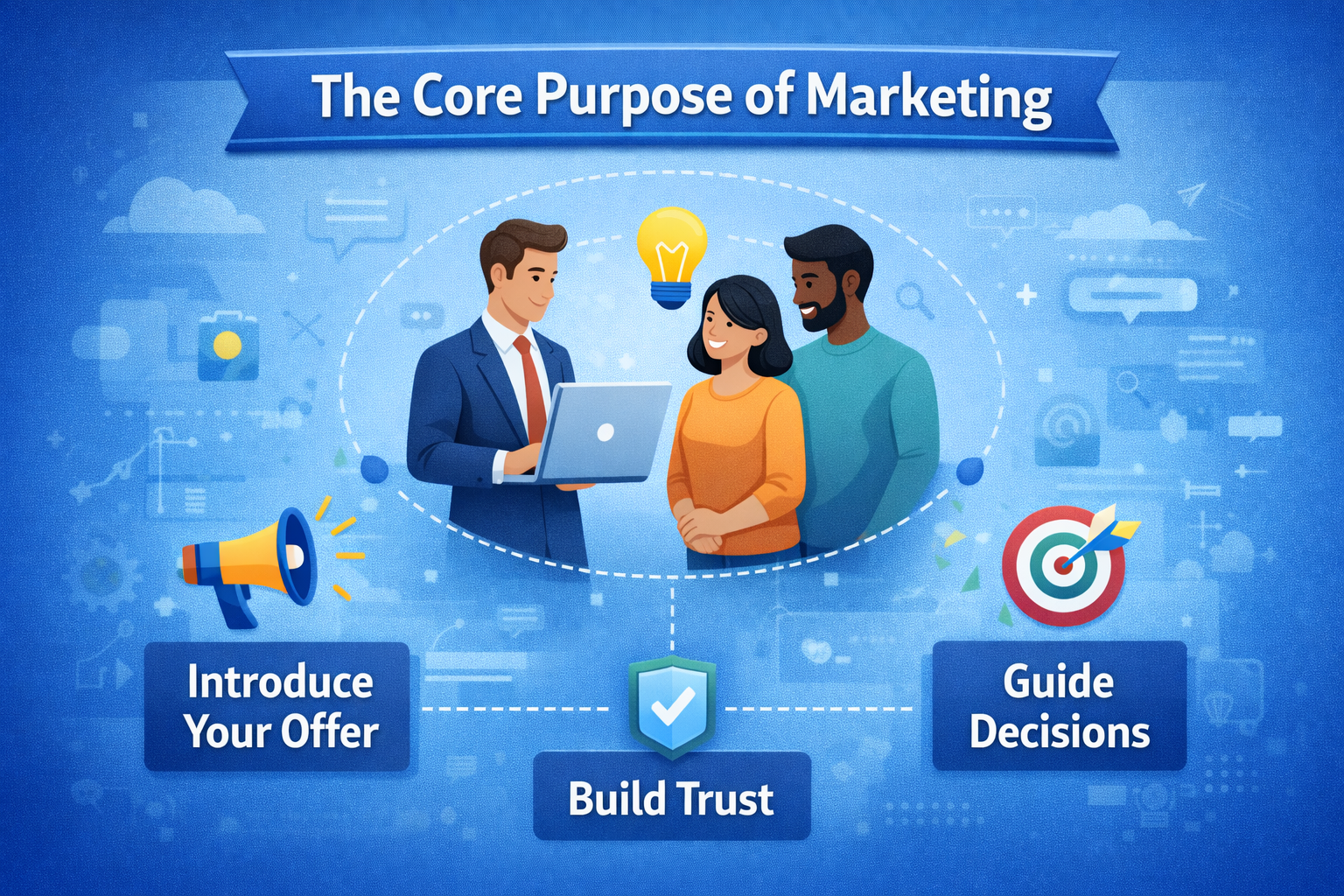
Strip away the buzzwords and jargon, and Marketing Fundamentals boils down to this:
You’re introducing your offer to the people most likely to want it.
A product or service, no matter how brilliant, means nothing if it never reaches the right audience—or if they don’t understand its value. Marketing builds that bridge between what you offer and who needs it.
Done well, marketing helps you:
-
Explain your offer in a way people instantly get
-
Build trust through honest, simple, consistent communication
-
Guide potential customers toward confident decisions
And here’s the key: effective Marketing Fundamentals doesn’t feel like pressure. It doesn’t feel like shouting, spamming, or tricking people. Instead, it feels like help—like you’re making it easier for them to solve a problem or get a result they care about.
That’s how Marketing Fundamentals transforms from “annoying ads” into genuine relationship-building.
Market Research Essentials: Start With Reality, Not Assumptions
Think of market research as your compass. Without it, you’ll probably move—but in which direction?
Research replaces guesswork with facts. It tells you what people actually want, how they behave, and where opportunities really are.
With strong research, you can:
-
See what your audience values and struggles with
-
Identify gaps in the market before you invest heavily
-
Shape your offer to fit demand
-
Reduce the risk of wasting time and budget
Let’s break down the main types and why they matter.
Primary vs. Secondary Research
You’ve got two big sources of insight: what you collect and what others have already collected.
Primary research
This is data you gather directly from your audience. Think:
-
Surveys
-
Interviews
-
Focus groups
-
Customer feedback and reviews
It gives you real-time, unfiltered opinions and experiences from the people you care about most—your potential or existing customers.
Secondary research
This is information that already exists, usually gathered by external organizations. Examples include:
-
Industry reports
-
Market studies
-
Public statistics
-
Whitepapers and research papers
It helps you understand the broader environment you’re playing in—market size, trends, competition, and shifts in demand.
Use both. Primary research helps you get close to your customer; secondary research helps you understand the world around them.
Competitor Analysis: Learning From the Battlefield
Your competitors are not just rivals; they’re data points.
By studying them, you can see:
-
What the market already accepts and responds to
-
Which messages, offers, and formats seem to work
-
Where they fall short—and where you can be better
Competitor analysis lets you:
-
Find a different angle or positioning
-
Avoid blending in with “me-too” messaging
-
Spot trends and patterns early
-
Sharpen your own strategy based on what’s proven and what’s missing
Instead of copying what others do, use them as a mirror: “Where do we fit, and how do we stand out?”
Industry and Trend Insights: Staying Ahead of the Curve
No industry stands still. New tech, cultural shifts, and economic changes constantly reshape how people buy.
If you ignore trends, you risk becoming that brand still playing yesterday’s game while everyone else has moved on.
Tracking industry and trend insights helps you:
-
Anticipate changes in customer preferences
-
Adjust your offers and messaging before it’s too late
-
Stay relevant and competitive
-
Avoid nasty surprises when the market shifts suddenly
In simple terms: trends tell you where the tide is going so you’re not swimming against it.
The 7Ps of Marketing: Your Strategic Blueprint
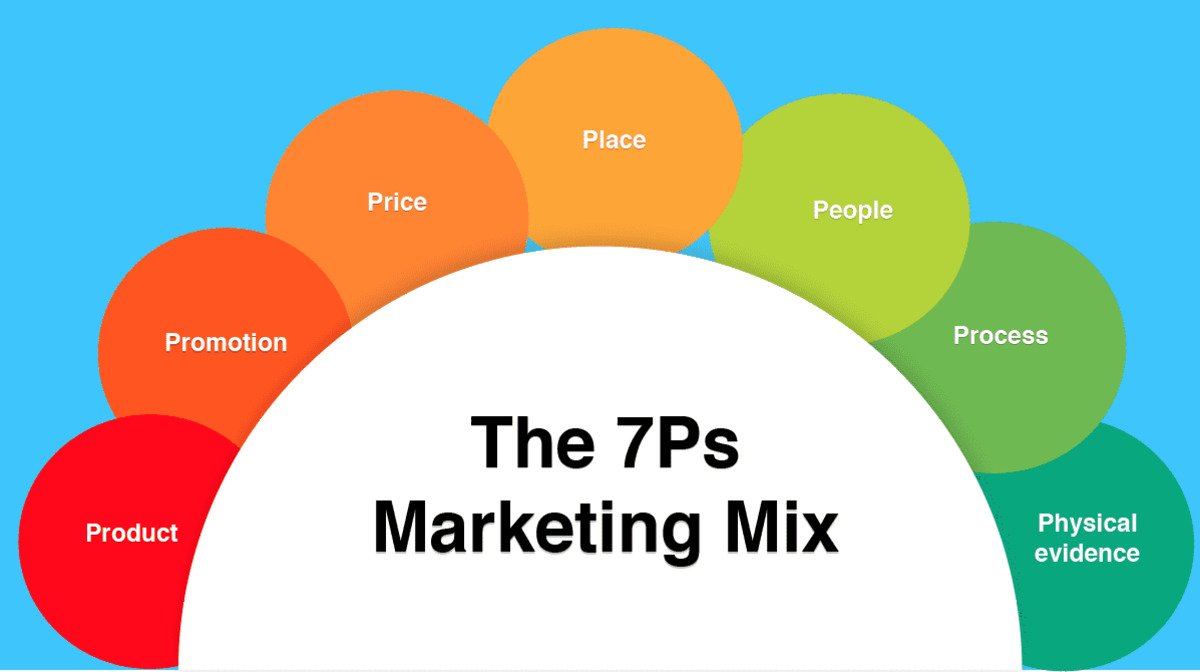
If marketing fundamentals are the “why,” the 7Ps of marketing are your “how.”
They expand the classic 4Ps (Product, Price, Place, Promotion) into a modern framework that reflects today’s customer-focused reality. Here’s the full list:
-
Product
-
Price
-
Place
-
Promotion
-
People
-
Process
-
Physical Evidence
Each one shapes how your brand is delivered, perceived, and experienced.
1. Product: The Solution You’re Really Selling
Your product is not just the thing you sell—it’s the solution you bring to the table.
When defining your product, look beyond its surface:
-
Features and functionality
-
Design, packaging, and usability
-
Quality and reliability
-
Customer support and after-sales service
Ask yourself: What problem am I solving? What outcome does this create for my customer?
If your product doesn’t deliver real value, no level of marketing wizardry will save it. The strongest campaigns in the world can’t compensate for a weak offer.
2. Price: What Your Value Says About You
Price isn’t just a number; it’s a signal.
It shapes how people see your brand:
-
High price? They may expect premium quality.
-
Low price? They may suspect lower value or budget positioning.
A good pricing strategy should:
-
Keep you profitable
-
Match your brand positioning (luxury, mass-market, budget, etc.)
-
Use discounts, bundles, and offers strategically—not randomly
The goal isn’t to be the cheapest. It’s to align your price with the value you provide and how you want to be perceived.
3. Place: Where Customers Find You
“Place” covers how and where people access your offer.
That includes:
-
Physical locations (stores, offices, warehouses)
-
Online platforms (websites, marketplaces, apps, social channels)
Effective placement ensures:
-
Your product is easy to find where your audience already shops or searches
-
Buying feels convenient—not like a chore
-
Your distribution supports your brand promise (fast delivery, wide availability, etc.)
If your ideal customer is mainly online, but you’re only focusing on offline, there’s a disconnect—and vice versa.
4. Promotion: Telling Your Story to the Right People
Promotion is how you communicate your value to the world.
It includes:
-
Advertising (online and offline)
-
Content marketing
-
Influencer partnerships
-
Public relations and media outreach
-
Direct marketing, like email or SMS campaigns
Your goals with promotion are simple:
-
Capture attention
-
Communicate benefits clearly
-
Encourage a clear next step (click, sign up, buy, share, etc.)
The key is consistency and relevance. The best promotion feels like a conversation, not a megaphone blasting in someone’s face.
5. People: The Human Side of Your Brand
No matter how digital business gets, people still crave human connection.
“People” covers:
-
Employees and customer support teams
-
Sales reps and account managers
-
Brand ambassadors and influencers
These are the people who:
-
Represent your brand in real time
-
Shape customer experiences, good or bad
-
Reinforce (or damage) your reputation
When your people are trained, motivated, and aligned with your values, they become one of your strongest marketing assets.
6. Process: How You Deliver Consistently
Process is the engine behind the experience.
It includes:
-
How you handle orders, deliveries, and returns
-
How quickly you respond to questions or problems
-
How you manage onboarding, follow-ups, and support
-
Internal workflows and systems
Good processes:
-
Reduce errors and delays
-
Make your service predictable and reliable
-
Build trust through consistency
Think of process as the invisible structure that holds your promise together.
7. Physical Evidence: The Proof You’re Real
Even in a digital-first world, people still look for tangible proof.
Physical evidence includes:
-
Product packaging
-
Store layout and design
-
Website look and feel
-
Business cards, brochures, and printed materials
-
Receipts, contracts, and official documents
-
Staff uniforms or ID badges
These details send signals about your professionalism, quality, and reliability. They reassure people that they’re dealing with a real, credible brand—not a fly-by-night operation.
Different Types of Marketing: Manual vs Digital
Now let’s talk execution. Broadly, you’ve got two big buckets:
-
Manual (traditional/offline) marketing
-
Digital (online) marketing
Both have their place. The trick is knowing how and when to use each.
Manual Marketing: Old-School, But Still Powerful
Manual marketing uses offline, physical, or face-to-face methods, such as:
-
Print ads, flyers, and posters
-
Brochures and catalogues
-
Cold calling or door-to-door selling
-
Trade shows, events, and in-person networking
-
Face-to-face sales meetings
What’s the purpose?
To create personal, tangible, trust-driven connections—especially in local or community-based markets.
Pros:
-
High personal interaction and relationship building
-
Great for local awareness and reputation
-
Physical materials (brochures, samples) can leave a lasting impression
-
Valuable in regions with limited internet access
Cons:
-
Time-consuming and labor-intensive
-
Often more costly due to printing and logistics
-
Harder to scale quickly
-
Less precise tracking and measurement
Manual marketing may feel old-fashioned, but when you need depth of relationship—especially in B2B or local businesses—it can still be incredibly effective.
Digital Marketing: Reaching People Where They Live Now
Digital marketing uses online channels to promote products or services and drive action.
Key digital channels include:
-
Websites and blogs
-
Social media platforms
-
Search engines
-
Email
-
Online ads
-
Mobile apps and messaging
Why is it crucial today?
-
Customers research, compare, and buy online
-
A strong online presence boosts trust and credibility
-
You get real-time insights into what people do and respond to
-
Results are measurable, so you can adjust and improve constantly
Digital marketing lets you reach the right person, at the right time, with the right message—often at a lower cost than traditional methods.
Traditional vs Digital Marketing: Same Goal, Different Tools
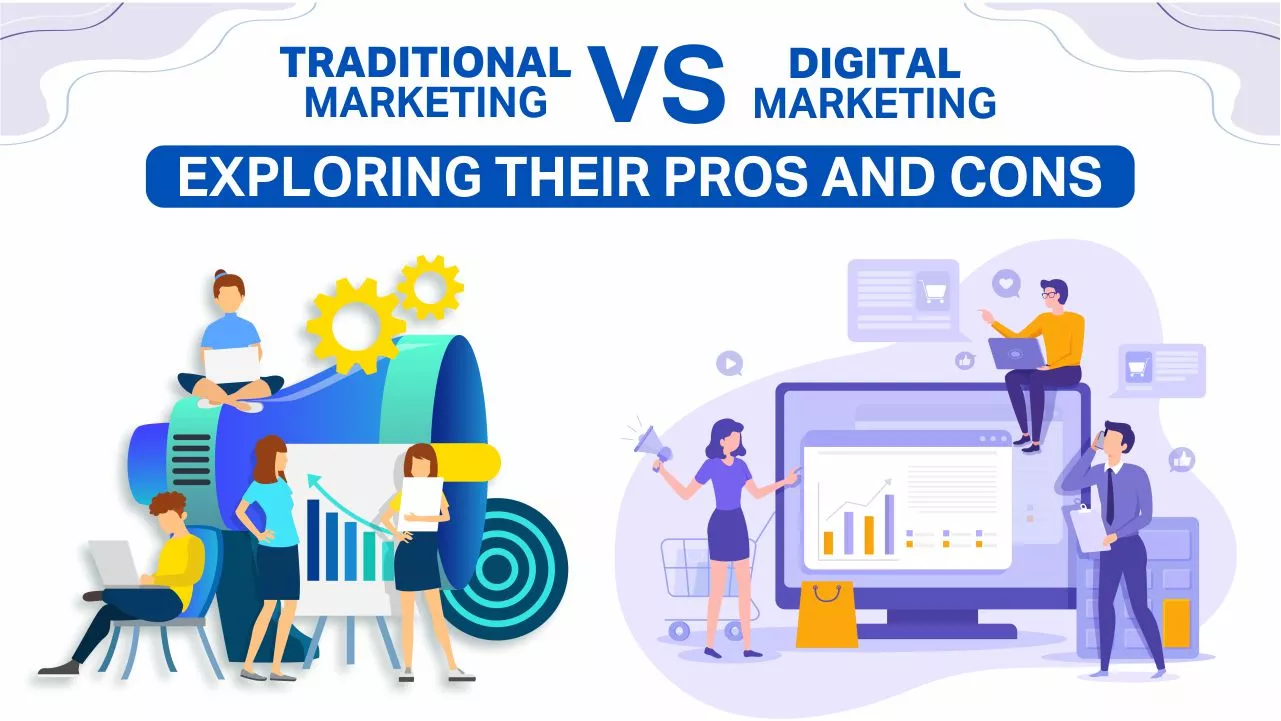
Both traditional and digital marketing aim for the same thing: reaching people with useful, relevant information.
-
Traditional methods:
Use print, broadcast, and offline channels. They’re great for mass awareness but often lack precise tracking. -
Digital methods:
Offer real-time data, detailed targeting, and easy optimization. You can see exactly what’s working and adjust quickly.
The smartest approach? Blend both where it makes sense. Use traditional channels for depth and local presence, and digital channels for reach, speed, and data.
Core Components of Digital Marketing
Digital marketing isn’t one tactic; it’s an ecosystem. Here are the main building blocks.
1. Search Engine Optimization (SEO)
SEO boosts your visibility on search engines so potential customers can find you when they’re actively looking.
-
Focuses on site structure, content quality, and technical health
-
Drives long-term, “free” organic traffic
-
Builds credibility and authority over time
Best practices:
-
Do keyword research based on real user intent
-
Optimize meta tags, headings, and internal linking
-
Publish helpful, well-structured content that answers real questions
2. Content Marketing
Content marketing is about creating valuable content—articles, videos, infographics, podcasts—to attract and nurture your audience.
-
Educates and informs
-
Builds trust and brand authority
-
Powers SEO, social media, and email
Best practices:
-
Solve real problems and answer real questions
-
Stay consistent in tone, style, and posting frequency
-
Use analytics to track what resonates and refine your approach
3. Social Media Marketing
This involves using platforms like Instagram, LinkedIn, Facebook, TikTok, or YouTube to build visibility and community.
-
Raises brand awareness
-
Enables direct engagement and feedback
-
Combines organic posts with paid promotion
Best practices:
-
Show up where your audience already is
-
Share clear, engaging, and relevant content
-
Track performance and optimize based on real data
4. Email Marketing
Email marketing is your direct line to your audience—no algorithm, no middleman.
-
Delivers newsletters, offers, and updates
-
Encourages repeat purchases and loyalty
-
Supports personalization at scale
Best practices:
-
Segment your list by behavior or profile
-
Craft strong subject lines and clear calls-to-action
-
Test and tweak your content, timing, and frequency
5. Pay Per Click (PPC) Advertising
PPC shows your ads on search engines and websites. You pay only when someone clicks.
-
Delivers instant visibility
-
Reaches high-intent users with precise targeting
-
Offers measurable ROI and flexible budgets
Best practices:
-
Target the right keywords and demographics
-
Write compelling ad copy and use focused landing pages
-
Monitor and refine campaigns regularly
6. Affiliate and Influencer Marketing
Here, other people promote your brand to their audience.
-
Affiliates earn commission per sale or lead
-
Influencers earn sponsorship or fees to showcase your products
Key benefits:
-
Access to new, engaged audiences
-
Leverage of existing trust and credibility
-
Often performance-based, reducing upfront risk
Best practices:
-
Choose partners aligned with your values and audience
-
Track conversions and engagement closely
-
Build long-term relationships for consistent impact
7. Mobile Marketing
Mobile marketing targets users on their phones via:
-
Mobile-optimized sites
-
Apps
-
SMS and WhatsApp
-
Push notifications
Key benefits:
-
Reaches users on-the-go
-
Enables personalized, location-based communication
-
Drives quick, frictionless actions
Best practices:
-
Prioritize mobile-friendly design everywhere
-
Keep messages short, clear, and relevant
-
Use notifications and texts thoughtfully—not as spam
Digital Marketing Strategy & Planning: From Random Posts to Real Plans
Without a strategy, digital marketing turns into a pile of disconnected posts, emails, and ads.
Here’s how to bring order to the chaos.
-
Set SMART goals: Clear, measurable, time-bound (e.g., “Increase organic traffic by 20% in 6 months”).
-
Define target audience and buyer personas: Know exactly who you’re talking to and what they care about.
-
Allocate budget wisely: Distribute money across channels based on goals and past performance.
-
Integrate channels: Make SEO, PPC, email, social, and content work together, not separately.
A strong strategy aligns your team, maximizes your resources, and turns marketing from guesswork into a predictable growth engine.
Trends in Digital Marketing You Should Watch
The fundamentals stay, but the tools evolve. A few big trends right now:
-
AI & Automation: From content suggestions to ad optimization and chatbots, AI is streamlining repetitive tasks and helping deliver smarter, faster campaigns.
-
Personalization: Users expect content and offers tailored to them—like personalized emails, dynamic websites, and product recommendations.
-
Video & Short-Form Content: Short, engaging videos dominate platforms like TikTok, Reels, and YouTube Shorts, offering massive reach and engagement.
-
Voice Search & Conversational Marketing: People increasingly “talk” to devices, and brands respond with voice-optimized content and real-time chat experiences.
Use these trends to enhance your fundamentals—not to replace them.
Creating Your Marketing Strategy Step by Step
Let’s tie it together with a simple, practical flow:
-
Define clear, measurable goals
-
Research and understand your target audience
-
Analyze competitors and wider market trends
-
Develop a sharp value proposition and clear messaging
-
Choose the best channels for your audience and goals
-
Plan execution: roles, timelines, tools, and budget
-
Monitor performance, learn, and optimize continuously
When each step supports the next, your strategy feels less like guesswork and more like a roadmap.
Common Marketing Strategy Mistakes to Avoid
A few traps can quietly kill your results:
-
Skipping market research: Acting on assumptions instead of data leads to wrong audiences, weak messaging, and wasted resources.
-
Ignoring customer feedback: Reviews, complaints, and suggestions are gold. Ignoring them means repeating the same mistakes.
-
Chasing only short-term wins: Focusing only on quick sales, trends, or virality can hurt long-term brand consistency and loyalty.
Avoid these, and you’re already ahead of many competitors.
Turning Fundamentals into Long-Term Growth
When you embrace marketing fundamentals, you give your brand something incredibly valuable: direction.
You know:
-
Who you serve
-
What value you deliver
-
How you’ll communicate and deliver that value
-
Which channels and tactics support your bigger goals
Each piece—research, 7Ps, manual and digital tactics, strategy, and optimization—works together like gears in a machine. With steady effort, that machine turns into sustainable growth.
You stop treating Marketing Fundamentals like a slot machine and start treating it like a system.
And that’s how you build a strategy—and a brand—that’s built to last.
Conclusion
Marketing Fundamentals At the end of the day, the brands that win aren’t always the loudest or the trendiest. They’re the ones that get the basics right and keep showing up.
They understand their customers deeply.
They create real value, communicate clearly and consistently and combine traditional and digital tools with a clear strategy.
If you anchor your marketing in these fundamentals, every new platform, tool, or trend becomes an opportunity—not a distraction.
So, here’s the question to ask yourself: are you building on a solid foundation, or are you stacking tactics on sand? The sooner you return to the fundamentals, the sooner your marketing starts working with you instead of against you.